Getting paid in the driveway (without the awkward bit)
The dog is gorgeous. Fluffy, fragrant, bow perfectly centred. The client is thrilled. Photos are being taken.
Then you say the number, and it begins.
The pat of the front pockets. The pat of the back pockets. The slow turn towards the house, as if the wallet might wander out on its own. "Oh, I thought I had cash..."
You both stand there doing the driveway shuffle, smiling a bit too hard, while the next dog’s appointment ticks closer.
It doesn’t have to go like this. The fix is mostly about choosing the right ways to get paid, and setting expectations before the clippers come out.
The short answer: for most mobile groomers, the smoothest setup is a card option you can use on the spot (tap to pay on your phone or a small card reader), PayID or bank transfer for people who prefer it, and an invoice with a pay link for anyone who isn’t home. Tell clients how you take payment when they book, and keep a record of how each person paid. One more thing worth knowing: since 1 October 2026, you can’t add a surcharge for most card payments.
Your options for getting paid on the spot
Cash
The classic. No fees, no tech, no signal required.
The downsides: you need change, you need to bank it, and some clients simply don’t carry it any more. And cash is still income. The ATO is clear that cash payments for your services have to be declared, so it needs recording just like everything else.
Bank transfer
Clients send money straight from their banking app using your BSB and account number. There’s no card fee, because there’s no card. Do check your own business account’s fees all the same.
The catch is that you’re trusting the client to do it, get the numbers right and actually press send. "I’ll do it tonight" is a lovely sentiment with a mixed track record.
PayID
PayID is a bank transfer with the fiddly bits removed. You link something easy to remember, like your mobile number, email or ABN, to your account, and clients pay it from the Pay Anyone section of their banking app. According to Australian Payments Plus, the person paying sees the name linked to the PayID before they hit send, which helps with mistaken payments and scams. It’s offered by more than 100 financial institutions.
Great for regulars who’d rather not use a card. Same caveat as a transfer: they still have to do it.
A card reader
A small reader that pairs with your phone. Clients tap, insert or swipe, and the money goes to your account through the provider.
You’ll pay for the reader, plus a fee on each payment, usually a percentage and sometimes a small fixed amount on top. Fees vary between providers and change over time, so compare current pricing pages rather than trusting a number in a blog post. (Including this one.)
Tap to pay on your phone
Your phone becomes the card reader. The client taps their card or phone against yours and you’re done, with no extra gadget to charge or lose under the seat.
You’ll still pay the provider’s processing fee, and your phone needs to support it. More on how this works in Clippers Base below.
An invoice with a pay link
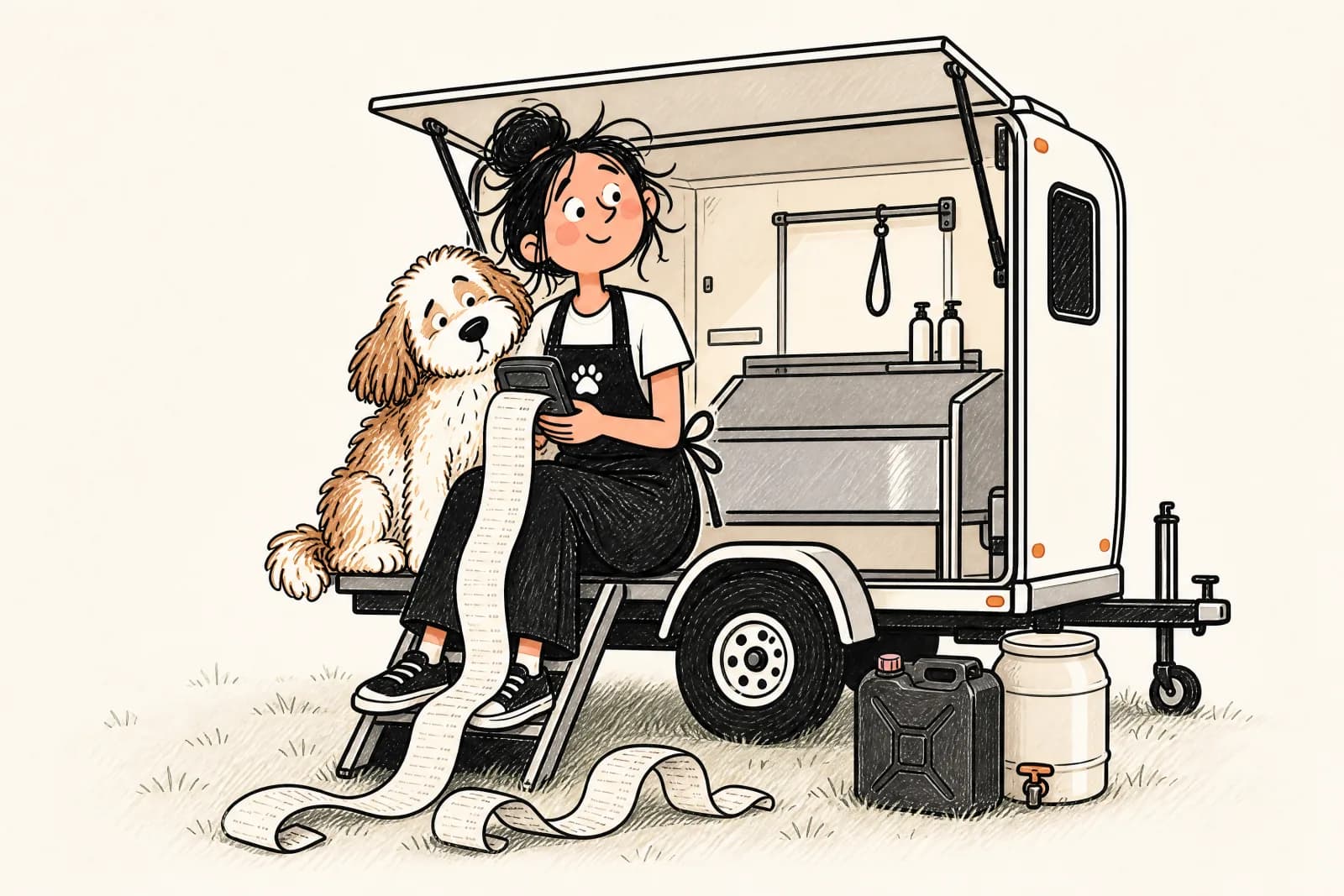
Send an invoice by text or email with a link, and the client pays when they open it. This is the hero for anyone who isn’t home, the regular who pays weekly or the partner who "does the banking".
It’s not instant, though. You’re back to relying on someone opening a message, so it pays to have a way to follow up.
Comparing costs, speed and hassle
Here’s the rough lay of the land. Check your own bank’s and provider’s current fees, because they’re the ones that count.
- Cash: no fees, paid on the spot. Hassle: change, banking, recording.
- Bank transfer: no card fee. Hassle: client has to remember and get the details right.
- PayID: no card fee, and the client sees your name before paying. Hassle: client still has to do it.
- Card reader: a fee per payment plus the reader. Paid on the spot. Hassle: one more device to keep charged.
- Tap to pay on your phone: a fee per payment, no extra hardware. Paid on the spot. Hassle: needs a compatible phone and a connection.
- Invoice pay link: depends on how they pay. Hassle: you’re waiting, and sometimes chasing.
Most groomers end up using two or three of these. The trick is making the on-the-spot option the easiest one, so it’s the one people choose.
Card surcharges in plain English
This changed recently, so if you used to add 1.5% for cards, read on.
The Reserve Bank of Australia decided that card surcharging was no longer working as intended. From 1 October 2026, surcharges on debit, prepaid and credit cards on the eftpos, Mastercard and Visa networks were removed (RBA). The RBA’s FAQs add that American Express, UnionPay and PayPal have also decided to remove surcharging, although they’re not formally regulated by the RBA.
What that means for you, according to the RBA, business.gov.au and Consumer Protection WA:
- No extra charge for paying by card. Not on a reader, not on tap to pay, not online.
- Renaming it doesn’t work. Calling it an "admin fee", "processing fee" or "service fee" that only applies to card payments is still a card surcharge.
- Fees that aren’t about the payment method can stay. Weekend surcharges, public holiday surcharges and booking fees aren’t affected, as long as they apply however the client pays and are made clear.
- Discounts for particular payment methods are still allowed, according to the RBA’s FAQs. If you go down this path, make sure your prices are displayed clearly.
- Card fees for businesses are coming down. The RBA also lowered the caps on interchange fees for domestic debit and consumer credit cards, which it says should help small businesses especially.
So the cost of taking cards now lives in your prices, not on top of them. That’s another good reason to work out your true cost per hour.
A field guide to the six species of "I’ll pay you later"
Every groomer meets them eventually. Here’s how to spot each one, and what to do.
- The Pocket Patter. Genuinely thought they had cash. Genuinely doesn’t. Habitat: the front step. Response: "No worries, I can take a tap or you can PayID me now." Having a card option on the spot makes this species almost extinct.
- The "Next Time" Regular. Lovely, loyal, and quietly running a tab. Response: add it to their invoice, and gently mention it when you confirm the next booking. Don’t let two visits become four.
- The Ghost. Leaves the dog in the backyard and the side gate unlatched, but is nowhere to be seen. Response: agree in advance how they’ll pay. An invoice with a pay link sent the moment you finish works well here.
- The Delegator. "My partner handles all that." Response: ask for the partner’s mobile number and send the invoice there.
- The Transfer-Tonighter. Fully intends to do it after dinner. Dinner turns into a week. Response: a PayID on the spot beats a promise for tonight. If it has to be later, send an invoice so there’s a link to tap.
- The Brand-New Mystery. A new client you’ve never met, often found in online enquiries. Response: some groomers ask new clients for a deposit when they book, by PayID or a payment link. If you do, say clearly up front how much it is and whether it’s refundable if they cancel.
None of these people are villains. Most just need the paying bit to be easier than not paying.
Setting expectations before the clippers come out
Half the awkwardness disappears if people know what to expect.
- Say it when they book. "Payment’s on completion by card, PayID or cash."
- Say it again in the reminder. A short line the day before saves a lot of pocket-patting.
- Know your policy for regulars who aren’t home. A pay link, a PayID straight after, whatever suits, but agree it once rather than negotiating every visit.
Keeping a clean record of who paid how
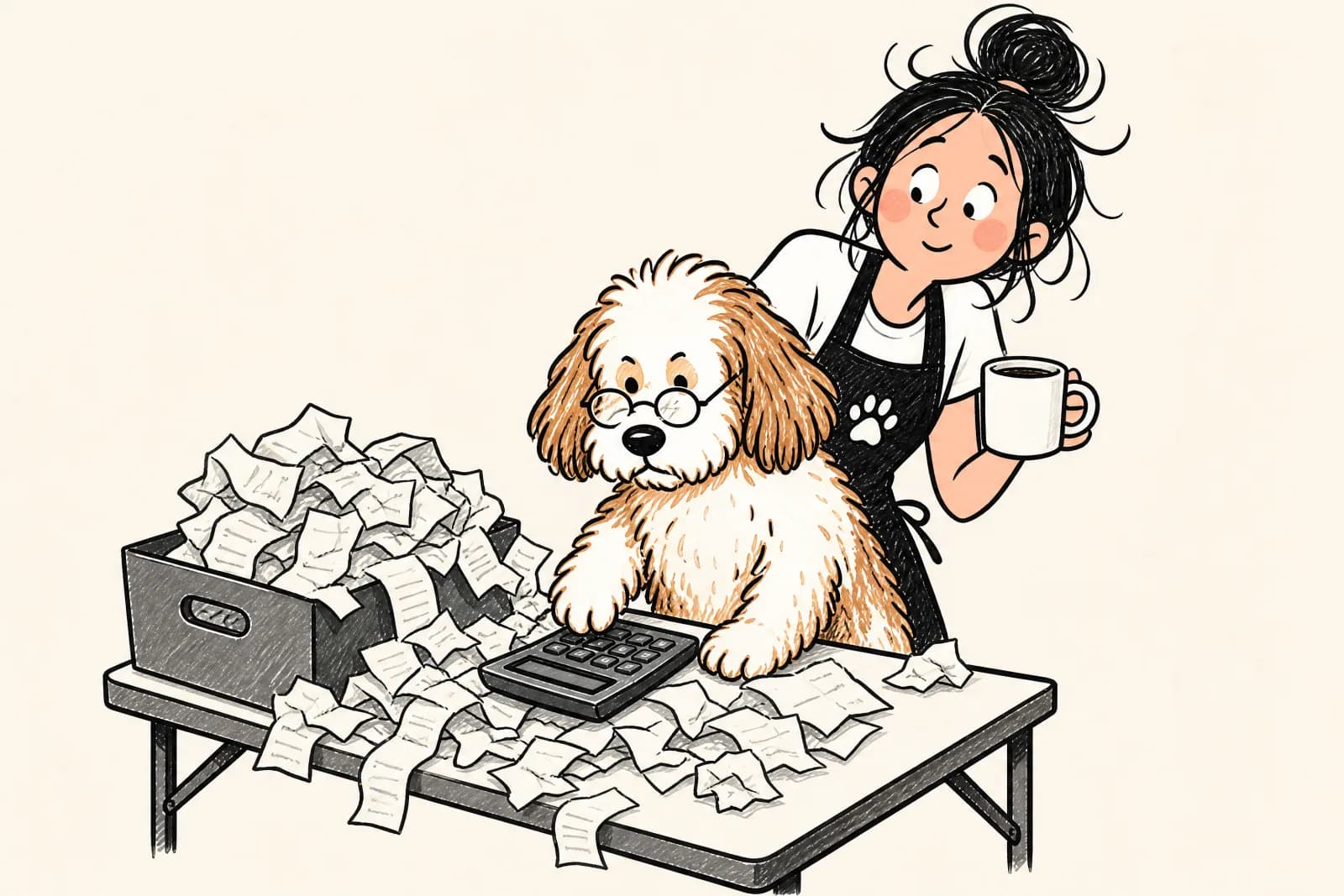
Come tax time, "I’m fairly sure the spoodle paid cash in March?" is not a record.
The ATO says most business records need to be kept for five years. For payments, that means knowing for each job what you charged, how they paid and when. If you take money four different ways, you want all four in the same place, not scattered across a cash tin, a banking app, a card provider and your memory.
How Clippers Base handles getting paid
In Clippers Base, payment is one step of a booking that already knows the client, the dog, the price and the invoice. Here’s what that covers.
- Tap to Pay on your phone (iPhone XS or later, or Android 13 or later with NFC), through your own Stripe account. Clippers Base adds nothing to Stripe’s fees and never holds the money. Stripe’s fees are on its Australian pricing page.
- Invoices with your logo (and ABN if you’re registered for GST), sent by text with a pay link. Clients can pay by card, Apple Pay, Google Pay, PayID or bank transfer.
- An end-of-day sheet that asks how each client paid, so takings are recorded.
- Outstanding invoices with a one-tap chase, and reports of takings and how people paid.
One honest note for driveways with no signal: recording payments and invoices keep working offline and sync when you’re back in range, but card payments wait until there’s a connection.
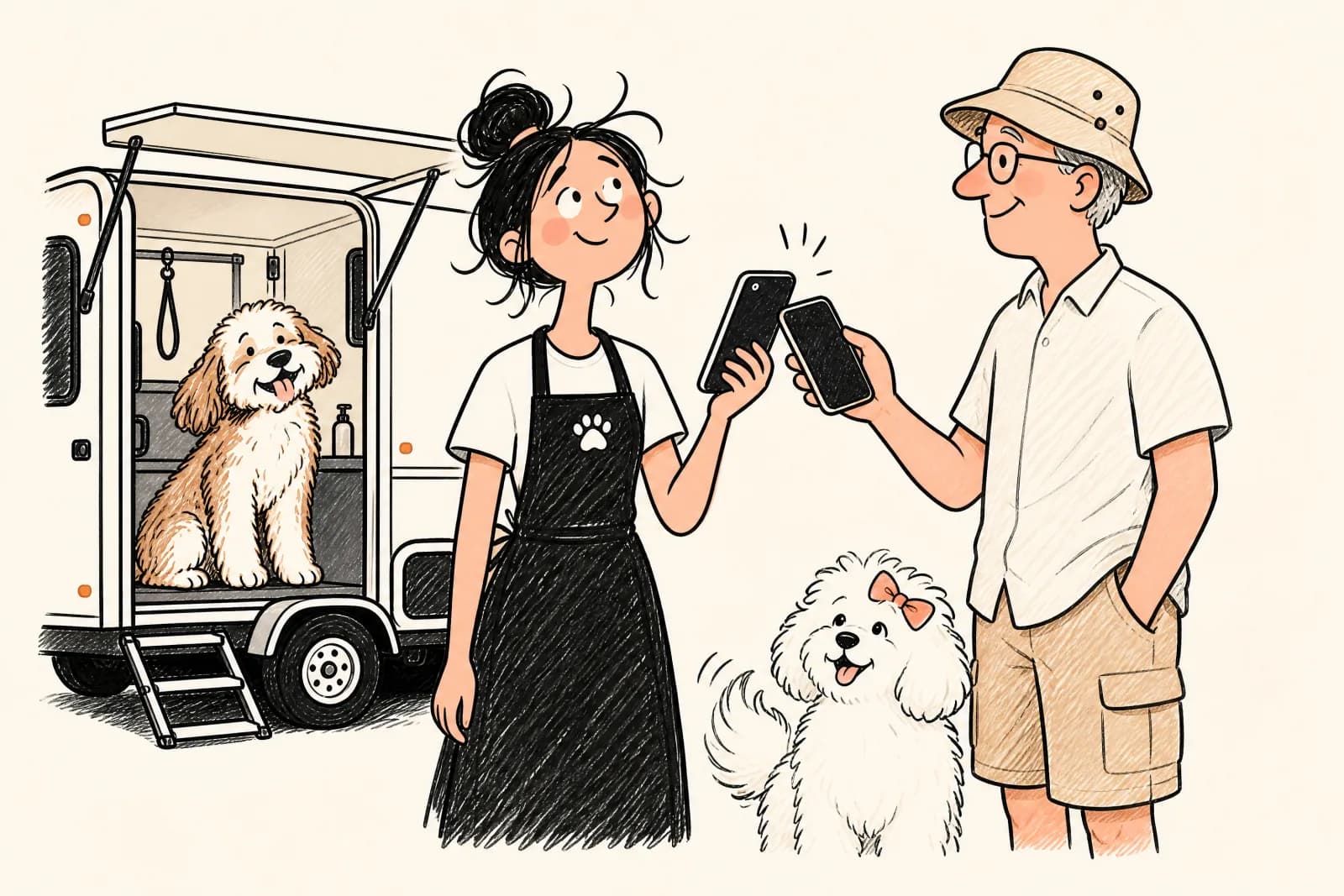
Get the setup right and the driveway moment changes completely. The client holds out their phone. You hold out yours. A little beep.
Behind them, a freshly groomed dog wags like it’s just won something.
That’s the only shuffle you want in the driveway.
This is general information, not legal or tax advice. Payment rules change, so check the RBA and your provider for the latest, and your accountant for your numbers.
Sources
- Removal of payment surcharges from 1 October 2026, FAQs (Reserve Bank of Australia)
- Review of Merchant Card Payment Costs and Surcharging, Conclusions Paper (Reserve Bank of Australia, 31 March 2026)
- Review of Payments System Regulation, Issues Paper (Reserve Bank of Australia, June 2026)
- Card payment surcharge changes (business.gov.au, 1 October 2026)
- What the ban on card surcharges means for your wallet (Consumer Protection WA, 8 October 2026)
- PayID (Australian Payments Plus)
- Stripe pricing, Australia
- What to include in your business’s assessable income (Australian Taxation Office)
- Overview of record-keeping rules for business (Australian Taxation Office)