Client notes future-you will actually thank you for
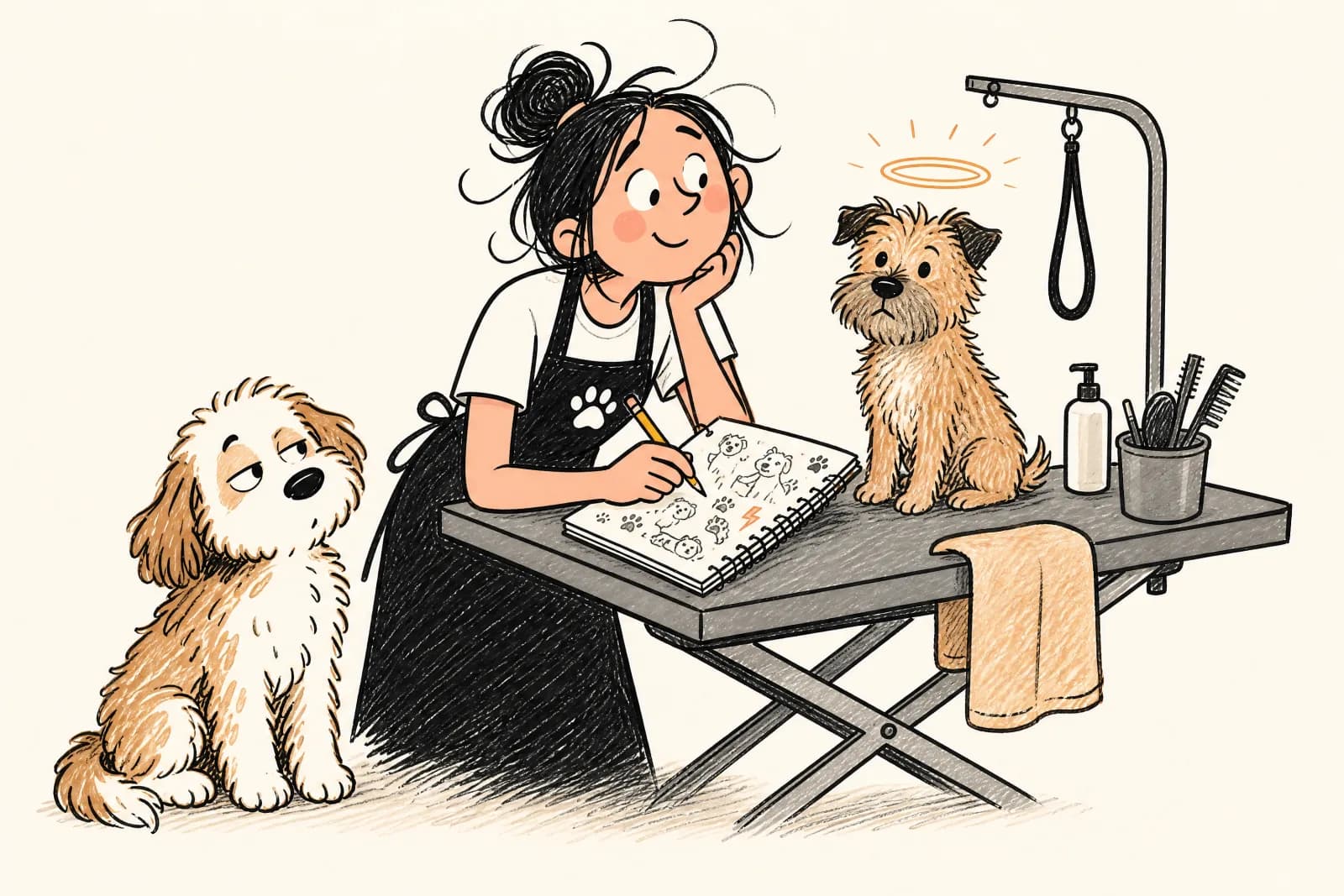
Look at this terrier. Big eyes. Neat little paws. A faint golden glow around the head, like something off a Christmas card.
Now look at your notes from eight weeks ago: "Small furious potato on the left side. Do left back foot first while he’s still deciding how he feels."
That’s the job of a client record. Not to describe the dog the owner sees, but the dog you meet on the table. The one who’s an angel at home and a velociraptor near the dryer.
And it’s written for one very specific reader: future-you. Future-you is tired, running twelve minutes late and has wet socks. Future-you can’t remember whether this was the doodle with the sensitive ears or the other doodle with the sensitive ears. Be kind to future-you.
Here’s what every grooming client record should cover:
- The dog: coat type and condition, the clip, blade and comb lengths, behaviour and handling, health and allergy flags, vet details and photos.
- The owner: contact details, gate codes and parking, how they like things done, and what you agreed on (including price).
- Each visit: the date, what you did, anything new, and when they’re due back.
There’s a full checklist below you can copy. First, the why.
Why grooming notes matter more than you think
You might groom a dog six or eight times a year. That’s a long time between visits for a human memory, especially one that’s handled forty other dogs in between.
Good notes mean:
- The groom is consistent. Same length, same shape, same owner smile.
- Fewer surprises. You know about the bitey back foot before you reach for it.
- Safer handling for you and the dog.
- Owners feel remembered. "Still not too short on the ears?" is a small sentence that does a lot of heavy lifting.
- Someone else can step in. If you ever take on help or need cover, notes are the handover.
What to record about the dog
Coat type and condition
Write down the coat type in words you’ll understand later (double coat, curly, wire, silky, drop coat) and how it’s tracking: matting, where it mats, how long since the last groom, and whether it was brushed in between. "Mats behind ears + armpits, owner not brushing" tells future-you exactly where to start and what conversation to have.
The clip, blades and combs
This is the stuff you’ll kick yourself for forgetting:
- The overall style or clip, in your own words.
- Blade numbers for body, face, feet and sanitary areas.
- Comb attachment lengths, and where you used them.
- Scissor work: what you shaped and how much you took off.
- Anything that didn’t work last time.
Behaviour and handling
Be specific and be honest. "Difficult" helps nobody. "Hates feet touched, especially back left. Settles with a lick mat. Muzzle for nails" is a plan.
Note what helps (breaks, treats if the owner’s fine with them, a particular order of jobs) and what sets the dog off (dryer noise, being lifted, other dogs walking past the van).
Health and allergy flags
Record anything the owner tells you and anything you notice: skin conditions, allergies to shampoos or products, sore joints, recent surgery, age-related stuff like poor hearing or eyesight.
You’re not diagnosing. You’re noticing. If you find a lump, a sore ear or a hot spot, write down where it was and that you told the owner. If something looks worth a vet’s attention, say so to the owner and leave it there.
Vet details
The clinic name and phone number. You’ll rarely need it. When you do, you’ll need it quickly.
Photos
A before and after photo from each groom is the most useful note of all. It settles "that’s not how it looked last time" in about two seconds, and it shows future-you what a good result looked like for this dog.
What to record about the owner
Gate codes, parking and access
Mobile groomers know this one. The difference between a smooth arrival and ten minutes of circling the block is a note like: "Park on the street, not the driveway (steep). Side gate code 4471. Dog’s usually in the laundry." (That code is made up. Please don’t try it.)
Also worth noting: power and water access if you need them, the neighbour’s reactive dog, and where the bin is so you’re not lugging fur bags back to the van.
Their preferences
The owner’s own words are gold. "Not too short on the ears." "Keep the tail fluffy." "Do NOT shave the moustache, it’s his whole personality." Write them down close to how they said them.
What was agreed
If you discussed a shave-down because of matting, a price change, a new style or an extra service, record that you talked about it and what they said yes to. Short, dated, factual. It’s not about catching anyone out. It’s so neither of you has to rely on memory next time.
The grooming client record card checklist
Copy this into your notebook, spreadsheet or app.
The owner
- Name, mobile number and address
- Gate code, parking and access notes
- Preferred contact time or method
- How they pay, if that’s useful to know
The dog
- Name, breed or mix, age, size
- Coat type and current condition
- Clip or style, in plain words
- Blades, comb attachments and scissor notes
- Behaviour and handling notes (what helps, what doesn’t)
- Health notes, allergies and product sensitivities
- Vet clinic name and phone number
- Before and after photos
Each visit
- Date and services done
- Anything new you noticed and told the owner about
- Anything agreed (price, style change, shave-down)
- When they’re due back
Grooming note shorthand, decoded
Every groomer develops their own shorthand. Here’s a realistic sample of what ends up scrawled on a card, and what it means:
- "NTS ears": not too short on the ears. The owner said it twice.
- "L/B foot = no": left back foot is off limits until the end, and even then, negotiate.
- "Velcro": will not leave your side. Lovely. Difficult to scissor.
- "Statue": stands perfectly still. Treasure this dog.
- "Opera singer @ dryer": makes noises that bring neighbours to windows. Not in pain, just dramatic.
- "Pelted, O/agreed shave": badly matted, owner agreed to a shave-down. Write the date next to it.
- "Potato L side": see the top of this post.
Shorthand is fine as long as future-you can read it. If you’re the only one who’ll ever see the notes, go wild. If someone else might, keep a little legend somewhere.
How to write notes fast between dogs
You’re not going to write a novel in the 90 seconds between packing up and driving off. You don’t need to.
- Do it before you start the engine. Notes written at the end of the day are vague. Notes written in the driveway are useful.
- Facts, not feelings. "Bit at nails, used muzzle" beats "awful today".
- Write only what changed. If everything’s the same as last time, a date and "as usual" is a perfectly good note.
- Update the main note when something’s permanent. If the dog now has a bad hip, it shouldn’t live only in one visit’s notes.
- Talk instead of typing. Voice notes are much faster when your hands are full of dog.
If you use Clippers Base, that last one is built in: speak a voice note and you get a written transcript saved on the booking. Each client and dog record holds coat, size, temperament, health notes and visit history, and there’s a key note shown on every booking, which is exactly where "potato on the left side" belongs. The Today screen’s written brief for the day is built from each client’s visits, notes and voice notes, so the morning version of you gets a heads-up before the driveway version needs it.
Privacy basics for client information
You’re holding names, phone numbers, addresses, gate codes and notes about when people aren’t home. That’s worth looking after.
Whether the Privacy Act applies to you depends on your business. According to the OAIC, most small businesses with an annual turnover of $3 million or less aren’t covered, but some are. Certain kinds of businesses are covered regardless of turnover, including ones that trade in personal information, and a small business can also choose to opt in. The OAIC has a privacy checklist for small business to help you work out where you stand. If you’re unsure, ask your industry association or a lawyer.
Even if the Act doesn’t cover you, the OAIC recommends protecting any personal information you hold as a matter of best practice. Some sensible habits:
- Collect what you need, not everything you can.
- Lock your phone and laptop. A grooming notebook full of gate codes on the passenger seat is a gift to the wrong person.
- Don’t share client details in group chats or social posts, including addresses and house numbers in the background of photos.
- Ask before posting a dog’s photo if the owner, their home or their car could be recognised.
- Tidy up old records for clients who’ve moved on and you don’t need anymore.
- Never sell or swap your client list. Trading in personal information can bring a small business under the Privacy Act whatever its turnover, and it’s a quick way to lose trust.
Good notes aren’t about being organised for the sake of it. They’re a small kindness to the person who’ll be standing in a driveway eight weeks from now, wet socks and all, about to pick up a terrier with a halo.
Write it down. Future-you is counting on it. And if you’d rather talk than type, Clippers Base is happy to listen.
This is general information, not legal advice. If you’re unsure about your privacy obligations, the OAIC or a lawyer can help; we’re better with blade numbers.